What a Data Center Actually Is (Inside Look)
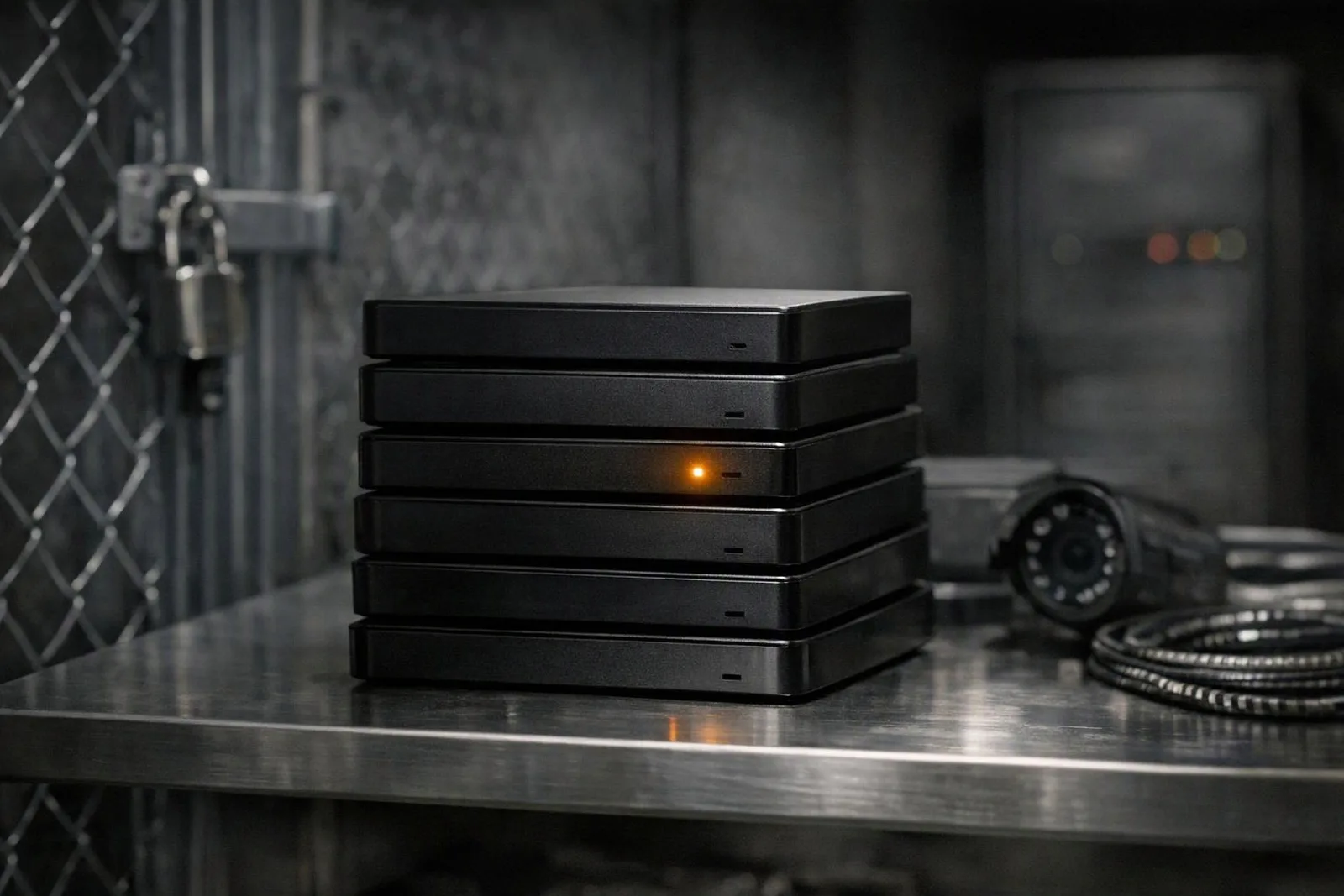
Strip away the mystique: a data center is a warehouse for computers, engineered so those computers never turn off. Inside: rows of racks — standardised 19-inch frames holding servers, each sliding in on rails; each vertical slot is a rack unit (U), with a typical server occupying 1–4U. Above the racks, cable trays carry structured networking; beside them, power distribution units step down UPS-fed electricity to every machine.
Beyond the server floor sits the network room where multiple telecom carriers hand off internet transit and peering. Around everything: concentric layers of physical security — gates, guards, mantraps, biometric doors, CCTV. No windows, minimal staff, massive concrete: a building whose single purpose is deterministic uptime for other people's computers.
Power, Cooling and Connectivity Explained
Three systems do the invisible work:
- Power: two independent utility feeds where possible, UPS rooms bridging the seconds a generator needs to start, then diesel generators sized to run the facility for days. Design standards are N+1 or 2N — one more unit than needed, or double everything.
- Cooling: a rack emits tens of kilowatts of heat; without continuous cooling, CPUs throttle within minutes. Hot/cold aisle containment keeps servers inhaling cold air, with CRAC units extracting the heat.
- Connectivity: multiple carriers on diverse physical paths — Airtel, Jio, Tata, Sify plus international cables — so a single fibre cut does not isolate the facility. BGP routing shifts traffic between carriers automatically.
Tier Levels I-IV and Uptime Math
The Uptime Institute rates facilities in four tiers by how much backup equipment they carry, and each step down in risk buys a step up in expected uptime:
| Tier | What it adds | Expected annual downtime |
|---|---|---|
| Tier I | Basic capacity: UPS and 24/7 cooling; no redundancy | ~29 hours |
| Tier II | Redundant power and cooling components (generators, chillers) | ~22 hours |
| Tier III | Concurrently maintainable — maintenance needs no shutdown | ~1.6 hours |
| Tier IV | Fault tolerant — independent, isolated systems survive failures | ~26 minutes |
The math is what the numbers mean for you: a Tier I building can be down most of a working day each year, while a Tier III building can be down for about two coffee breaks. Reputable Indian hosting facilities sit at Tier III or better; ask a host which tier its buildings carry before you judge an uptime promise.
India's Data Center Hubs and Peering
India's data center capacity clusters in a handful of cities: Mumbai leads by a wide margin — most international subsea cables land there — followed by Chennai, which lands the eastern cable routes; Delhi NCR, Bengaluru, Hyderabad and Pune round out the map. Hosting your site in or near the city where most of its visitors live shortens every request's route.
Inside the buildings, exchanges such as NIXI let Indian networks hand traffic to each other directly instead of routing through Singapore or Europe, which trims tens of milliseconds per visit. When you compare hosts, the city matters more than the brand of the building: a Jaipur visitor reaches a Mumbai facility faster than a Singapore one.
Colocation vs Cloud vs Shared Hosting Chain
The chain from your ₹300 plan to concrete: shared hosting customers occupy slices of servers in racks the host rents; VPS customers occupy slices of the same; dedicated customers get whole machines. Colocation customers own their machines and rent only the rack space, power and network. Each layer up means more shared infrastructure and lower cost; each layer down means more control and higher price.
Cloud hosting changes what you rent but not where it lives: a cloud data center is the same kind of building, with the compute inside virtualised so customers rent capacity instead of whole machines. What a cloud panel calls a "virtual data center" is a slice of that virtualised capacity — your servers exist as software-defined instances on shared physical racks. Cloud platforms run several types of data centers for cloud computing: large core regions, smaller edge facilities near users, and availability-zone pairs for failover, all built to the same facility standards described above.
What stays constant regardless of tier: the facility's power, cooling, network and physical security surround your workload identically. That is the quiet argument for choosing a good host — you inherit their facility choices. A host in a Tier I building is a host with exciting weekends; a host in Tier III Mumbai with multi-carrier BGP is a host whose failures are usually software, not buildings.
Why DC Quality Affects Your Website
Three facility facts reach your site directly. First, uptime: your site inherits the building's power and cooling failures — a generator that does not start is your checkout that does not load. Second, latency: every visitor request travels to the facility and back, so the city the servers sit in sets the floor on your response times, especially on Indian mobile networks. Third, peak-hour stability: a facility with spare power and cooling capacity absorbs traffic spikes; one running at its limits throttles the servers inside it.
Application problems you can fix yourself; building problems you inherit from your host. That is why the facility question belongs in the buying decision, not after the first outage.
How to Check Where Your Host's DCs Are
Do not take marketing's word for geography — verify. Ask the host directly: 'Which data center and city will my plan use?' Legitimate hosts answer specifically; WebJi® states its datacenter footprint openly. Then verify technically: find your site's IP (ping yourdomain.com), run tracert and inspect the hops — carrier names and city codes appear in reverse DNS.
Check the host's status page for scheduled-maintenance history — frequency reveals operational reality. For compliance-sensitive workloads, ask for the DC's tier certification (an actual certificate document, not a homepage badge) and compliance attestations such as ISO 27001. Ten minutes of verification beats years of wondering why the site is slow at 9 PM — and the shared-vs-cloud guide shows how facility choices cascade into plan tiers.
Frequently Asked Questions
What is a data center in web hosting?
It is the building where your hosting plan's servers physically sit — with redundant power, cooling, network connections and security so the machines run around the clock. Every shared, VPS, cloud or dedicated plan is served from a rack inside one.
What do Tier 1 to Tier 4 data centers mean?
The Uptime Institute's four tiers rate redundancy: Tier I has basic power and cooling (~29 hours of expected downtime a year), Tier II adds redundant components (~22 hours), Tier III allows maintenance without shutdown (~1.6 hours), and Tier IV is fully fault tolerant (~26 minutes).
Where are India's main data centers located?
Mumbai holds the largest share — most international subsea cables land there — with Chennai, Delhi NCR, Bengaluru, Hyderabad and Pune as the other major hubs. Hosting in the city closest to your visitors shortens every request's route.
What is colocation versus cloud hosting?
Colocation means you own the servers and rent only the rack space, power and network in a facility. Cloud hosting means you rent virtualised capacity on the provider's machines. Shared hosting goes further: you rent a slice of one server the provider owns.
How do data centers stay online 24/7?
Redundant utility feeds, UPS systems that bridge the seconds until generators start, backup generators, and cooling systems with their own redundancy — laid out so maintenance or a single failure never stops the servers. Staff and monitoring watch the building around the clock.
What is N+1 redundancy?
It means one more unit than needed: if a facility requires three chillers to stay cool, it installs four, so one can fail or go offline for maintenance without affecting the servers. 2N doubles everything instead.
Is WebJi® an Indian company?
Yes. WebJi® is headquartered in Jaipur, Rajasthan and has operated since 2005. Billing, support and governance all run from India.
Do you provide GST invoices?
Every purchase and renewal gets a GST invoice with our GSTIN, and hosting prices are quoted exclusive of 18% GST. Claim input credit as applicable.